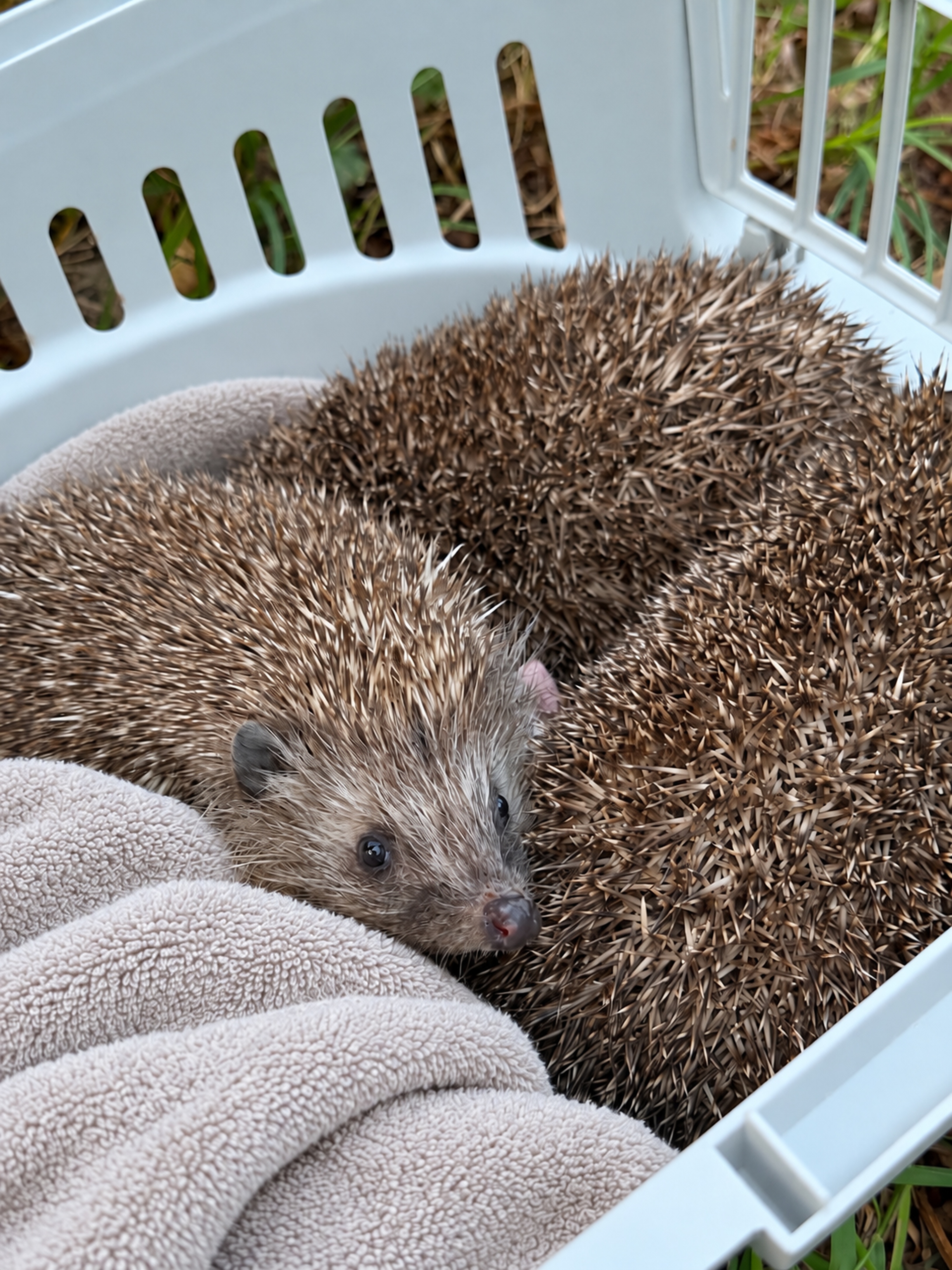
In autumn hedgehogs actively prepare for winter hibernation: they look for food, build up fat reserves and set up shelters. This is the time when you can often meet them in gardens, parks, yards or near roads.
When they see a small hedgehog, especially when it is already cold outside, many people rush to take it home to warm it up and feed it. But is that always necessary?
Not every hedgehog you meet in autumn needs rescuing. Sometimes the best thing you can do is leave the animal alone. But there are situations when a hedgehog may not survive without human help.
When does a hedgehog need help?
Healthy hedgehogs are usually active at dusk and at night, find food on their own and try to avoid danger. However, there are signs that an animal may need help:
- Visible wounds, bleeding or other injuries.
- Severe weakness, exhaustion or chilling.
- An unsteady gait, poor coordination or unnatural movements.
- No reaction when a person approaches.
- Flies, their eggs or larvae on the animal's body.
- Being trapped in a net or another dangerous situation.
Hedgehogs you meet during the day deserve separate attention. Although daytime activity does not always mean illness, a lethargic hedgehog lying in an open place and not trying to hide most likely needs help.
Young hedgehogs in late autumn need special attention. Animals weighing less than 450 grams are at high risk of not surviving the winter, because their fat reserves may not be enough. If you found such a hedgehog in late autumn or winter, you need to assess its condition and ask for advice.
At the same time, a small size alone does not mean that the hedgehog must be taken out of the wild. It is important to take into account the season, the weather and the animal's general condition.
What should you do if a hedgehog needs rescuing?
If the animal is injured, exhausted or in danger, it is important to act carefully.
1. Carefully move the hedgehog to a safe place.
Use thick gloves or a towel so as not to hurt the animal and to protect your hands from its spines.
2. Prepare a box.
Put the hedgehog in a cardboard box with ventilation holes. Place a clean towel or soft fabric on the bottom. The box must close securely so the animal cannot climb out.
3. Provide warmth and calm.
If the hedgehog is cold or weak, put a bottle of warm water wrapped in a towel in part of the box. It is important that the animal can move away from the heat source.
4. Do not try to treat or feed the hedgehog yourself.
Do not give the animal any medicine, do not use anti-parasite products and do not choose its diet without advice. Wrong treatment or feeding can make its condition worse.
5. Ask for professional help.
Contact a wildlife rescue or rehabilitation center. Describe the situation and send a photo or video of the hedgehog. This will help assess its condition and decide what to do next.
How can you help hedgehogs in your own yard?
If a hedgehog is healthy and lives near you, there is no need to take it home. Instead, you can create conditions that will help it prepare for hibernation.
- Leave fresh water. A shallow bowl of water is especially useful in dry weather.
- Feed if necessary. You can offer a small amount of good-quality wet meat-based cat or dog food.
- Keep natural shelters. Piles of leaves, branches and cozy corners of the garden can become a hibernation site.
- Be careful when cleaning up. Before clearing leaves or brushwood, make sure a hedgehog has not hidden there.
- Avoid poisons. Rodent and pest control products can be dangerous for wild animals.
Never give hedgehogs milk or bread. Milk can cause serious digestive problems, and bread does not provide the animal with the nutrients it needs.
What should you do if you accidentally disturbed a hedgehog during hibernation?
Hedgehogs often make winter shelters under piles of leaves or branches, in dense thickets or in other protected places. So when cleaning a garden or yard you may accidentally come across an animal that is already hibernating.
If you found a hedgehog in an undamaged nest, do not touch it. Carefully cover the shelter and leave the animal in peace.
If the nest is destroyed and the hedgehog is left without protection, do not leave it out in the cold. Carefully put the animal in a box and ask for help to decide what to do next.
Do not try to wake the hedgehog on purpose or check whether it is active. Every awakening from hibernation costs a lot of energy.
Where to ask for help?
If you found an injured, exhausted or sick hedgehog, contact our center. Describe the circumstances of the find and send a photo or video. We will help you assess the situation and suggest how to proceed.
If you are in another region of Ukraine, you can also contact the nearest wildlife rescue or rehabilitation center.
Remember: not every hedgehog needs rescuing, but timely help can save the life of one who is truly in trouble.